Circular Plastic Systems Group
The Circular Plastic Systems (CPS) group is part of the Circular Plastics Chair within the department of Circular Chemical Engineering at Maastricht University.
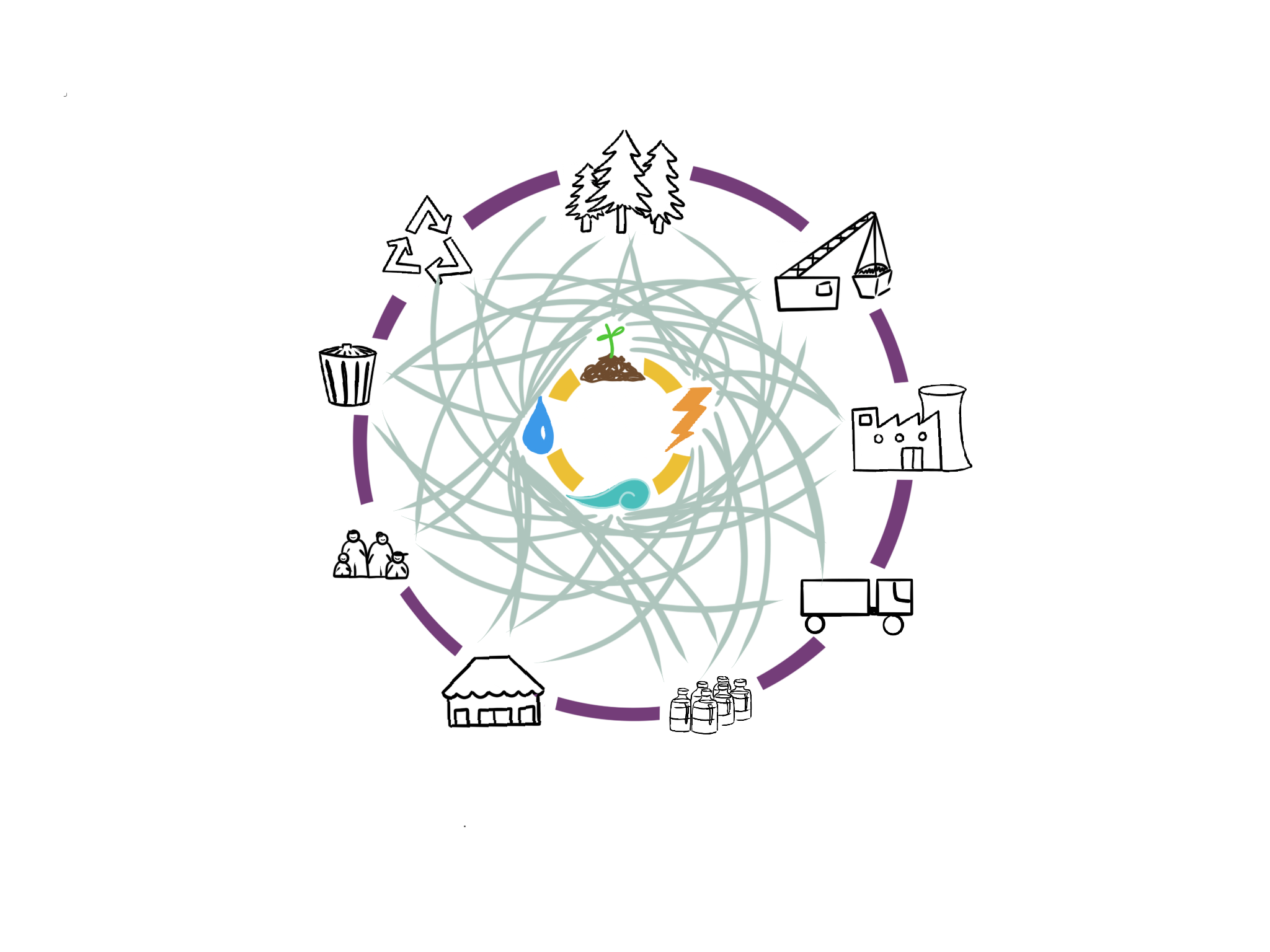
We believe that the biggest challenges for circular plastics are not purely technical but systemic. Recycling technologies must respond and adapt to legislation, markets, stakeholder behaviour, and product design.
-
Our focus is to understand, model, assess and improve the recycling plastic systems as a whole. Together with multidisciplinary scientists, industry, and other partners, we work on:
Systems thinking and dynamics: how changes in legislation, markets, material qualities, and technologies affect the overall system performance and material flows.
Complimentary recycling cascades: technological advancement of the different recycling technologies and pathways (mechanical, chemical, solvent-based) is constantly ongoing. How do they fit together into a circular plastics system that eliminates the use of virgin/fossil resources as much as possible?
Assessment & metrics: developing metrics that link system development to outcomes (recycled output quality, sustainability, and circularity), and that support shared understanding and better decision-making among stakeholders.
Modelling recycling complexity: How technical maturity, legislation, costs and incentives, stakeholder perceptions, and system dynamics interact as recycling systems advance, including complex streams such as multi-material products (e.g. footwear) and sensitive waste streams (e.g. medical plastics).
In short, we look at the systemic aspects of plastics circularity.
-
We are strongly linked to the Circular Engineering educational programme, where, we teach the following courses:
• Course on Systemic Circularity (R4: Rethink, Reuse, Repair, Recycle)
• Materials Science & Engineering,
• Materials & Production Engineering
We also provide open and tailored workshops on integrating circularity principles in product development
We share tailored, up-to-date and industry-relevant online courses through our website The Circular Platform
-
Ongoing:
· SCARPA: Sustainable and Circular Footwear Training Program:
· RePLACE: Recycling of Plastics from Cars and Electronic Equipment
Recently concluded:
· CircularFoodPack: Circular Packaging for Direct Food Contact Applications:
· INCREACE: Increase the share of recycled plastics in added value products
· Syschemic: Demonstrator of systemic solutions for the territorial deployment of the circular economy in the Trilateral Chemical Region with a focus on plastic waste streams Quality for Recycling
-
Lead:
· Prof. Kim Ragaert
· Dr. Cris Garcia-Saravia
PhDs & PostDocs (active):
- Rucha Kakatkar: Circular Product Development
- Charmayne Siebers: Quality of cross-contaminated recycled polyolefins
- Siyue Zhang: Quality of Circularity: Developing integrated metrics for Circular and Sustainable footwear
- Ali Ebrahimi: Recycling of Flexible Films
PhDs (defended):
- Merel Molenbuur– Quality of plastics from a systems perspective
- Irdanto Saputra Lase - Modeling Material Flows through Plastic Recycling Chain (w/prof. Steven De Meester, UGent)
- Manon Lisiecki – Circular Product Design (w/ prof. Anders Damgaard, DTU)
- Amir Bashirgonbadi - Advancing Polyolefin Film Recycling: Unveiling Insights from Composition to Processability and Performance (w/ prof. Kevin Van Geem, UGent)
- Nicola Van Camp - Cost calculation of plastics recycling (w/prof. Sophie Hoozee, UGent)
-
Here a list with our latest publications:
1. From quality to value: linking product and system perspectives in the plastic packaging ecosystem
3. Perceptions and alignment on quality along the circular plastics packaging material chain
4. Exposing the pitfalls of plastics mechanical recycling through cost calculation
5. Plastic recycling stripped naked–from circular product to circular industry with recycling cascade
-
Internships and theses: Bachelor’s and Master’s students are welcome to carry out an internship within any of our existing projects. We are located in Brightlands Chemelot Campus.
Case studies: We are always looking for industry collaborations to develop, test, validate, and improve our methods in practice.
Research projects: Either as part of a larger consortium, or a specific research question.
Interested? Contact us in the form below!